If you know your technique, but every time you step into the studio you feel pressure to create a masterpiece and you end up playing it safe, this post is for you.
It's not that you don't have talent. It's that your expectations are so high that they put all this pressure on every painting. Because of that, your work isn't truly expressing what you want it to express, and it doesn't feel free.
I'm Aixa Oliveras, and I've been a professional artist for almost 20 years. I know exactly what it feels like to have all the technique down and still feel like you're not fully expressing yourself as an artist. By the end of this post, you'll know whether mentorship is something you need right now, and whether it's the right fit for you.
Sign #1: You feel pressure every time you step into the studio
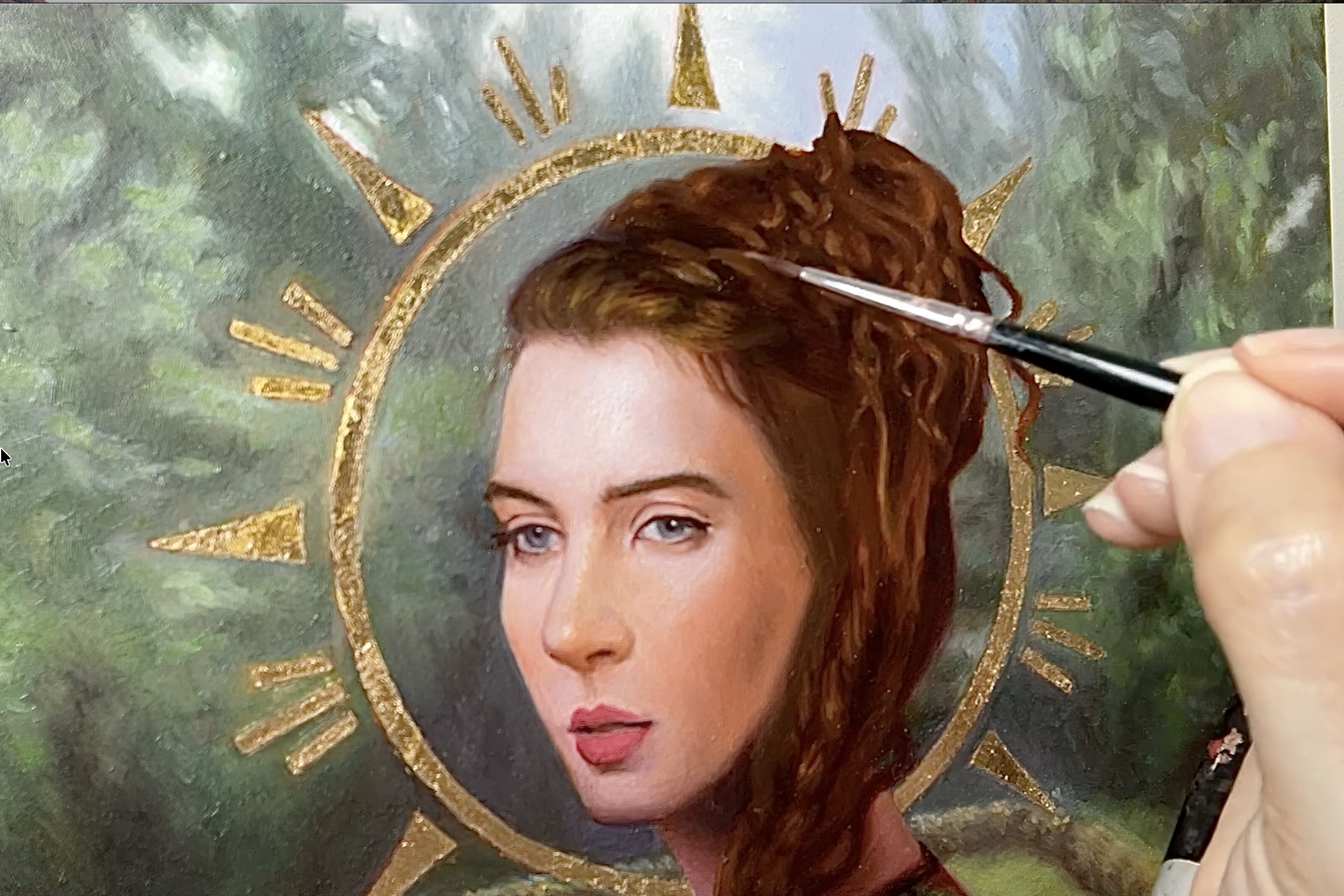
The pressure to create a beautiful masterpiece from the first minute you step into the studio can be emotionally exhausting. Believe me, I know because I speak from personal experience, haha. It can make the studio feel like a place of constant judgment, instead of a place where you simply sit down to paint, have fun, and enjoy the act of creating.
It's even harder if you're balancing a day job with your creative practice. You only have so much time in the studio, so you feel like you have to get it right from the get-go to make the most of those precious hours.
I call this the curse of the high achiever: expecting perfection every time you sit down to paint or draw. I'm very familiar with this one. I was a straight-A student, always pushed to achieve and succeed, and there was a gnarly fear of failure that came with it. That pressure to create a masterpiece from the first brushstroke makes you freeze up, and painting turns into a slog instead of something you enjoy.
What helps is remembering that drawing and painting is a continual process of learning and discovery. It's not a one-and-done kind of thing. Even now, after 20 years, I'm still learning new things about painting, and that's part of the joy of it.
Sign #2: Your work feels safe
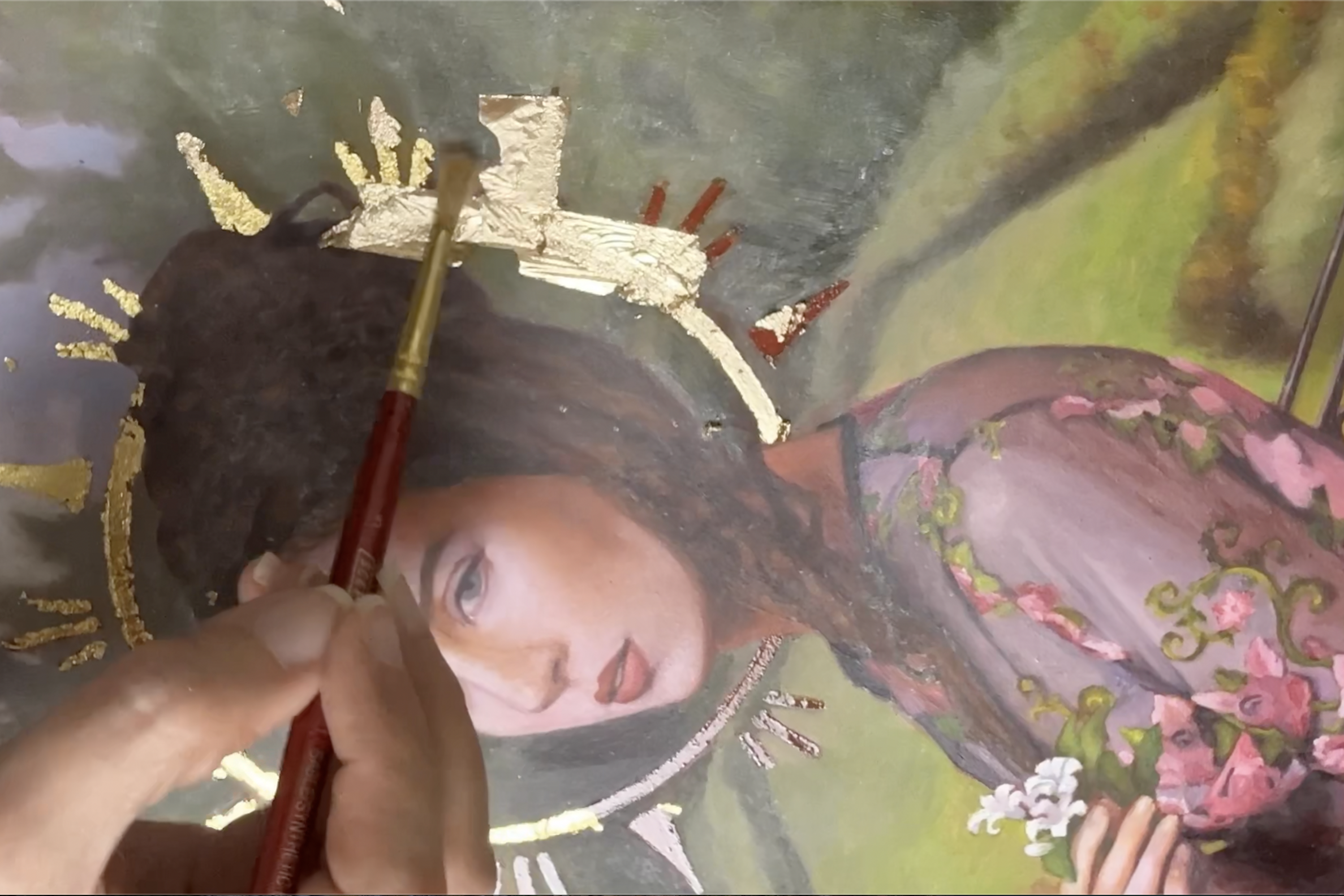
Not taking risks can look like what a respectable, responsible artist would do. But what happens is that your work ends up looking vanilla. It looks safe. Your technique and skills look fantastic, but it still feels meh, and you sense an internal block you can't seem to get through.
Often, underneath it is a fear that if you start to express what you really want to say in your art, you'll be rejected or kicked out of the art tribe, so to speak. So you play it safe.
Two things can help here:
Validate yourself. Instead of waiting for other people to tell you your art looks great, go within and see the worth and value your art has. Tell yourself, "I know my work has value. I know my work is good." You don't need an external authority to tell you that.
Follow what lights you up. Embrace the ideas and art movements that excite you, even if they're not acceptable to others. In my case, it's Art Nouveau, and you can see that influence in my work. Push aside the "Will this be successful? Will people like it?" questions and go on that internal journey of exploration.
Sign #3: You know the techniques, but fear and self-doubt get in the way

Here it's the fear of getting it wrong, of doing it wrong, that gets in the way of expressing what you truly want to express.
I have a personal story I can share about this with you. I once had a mentor who was well-meaning and told me I needed to be responsible with my images, meaning I needed to keep in mind the imagery I was creating and the messages behind it. That's good advice. But I was young and impressionable, and I took it way too much to heart. I felt like I had to continually supervise everything I created, and I froze up. I felt I had to be very careful not to make the wrong move when I was making an image or formulating ideas for paintings.
I had to learn to let go of that. It sounds pretty transgressive, right? Don't be responsible. But in a sense, I had to let go of the worry that I wasn't doing it right, that I wasn't doing it in a way that was responsible or acceptable. I decided I was going to paint what I want to paint and create what I want to create. If people receive it well, great. If they don't, that's fine too. At least I'm being true to myself, and that is the key to overcoming this.
Sign #4: You can't fully express yourself authentically
Maybe you don't know what your creative identity is. You don't know who you are as an artist, so your work ends up feeling safe, and you don't take risks. You might not know what to express or say with your art. There may also be a voice that says, "Who am I to express these things? I'm a nobody. Who would care?"
That's where you build a sense of ownership and find the authority within yourself, and start to see those negative beliefs for what they are: beliefs that don't serve you. Let go of the external validation and go with what's in your heart to create. Go with what gives you bliss in your work and what makes you happy in the studio.
Here's an exercise to try. Think about the artists you admire and the art movements you love. Look at why you love them so much. You'll start to see themes popping up again and again. Those themes are the clue that tells you what you want your work to be about.
Sign #5: You want guidance that feels tailor-made for you
You've probably watched all the YouTube tutorials, gone through all the books, and taken a whole bunch of courses, but none of them really address your own unique needs as an artist.
You're ready for somebody to sit down with you, look over your portfolio, and really pin down what you need to go to the next level with your art. You want someone to look at your current blocks and what you need right now, instead of cookie-cutter advice that could apply to anybody.
What mentorship did for my own work
This is part of why I decided to go to LCAD and get my master's degree. I felt I had exhausted everything I could learn from my bachelor's and from the scholarship I had studied with. They were great, and I learned a lot from them, but I felt I could push further, not only in technique but in what I wanted to say.
At LCAD, I was exposed to different viewpoints from many different kinds of artists, and it widened my horizons. My work, which had tended to be almost monochromatic, exploded into full color, with flowers, death, rebirth, and transformation as major themes. I don't think I could have gotten there, or had that freedom unleashed in my art, if I hadn't decided to look for mentorship.
What mentorship with me looks like
There are three ways to work together:
Individual sessions are for trying out mentorship before committing to a full program, or for one specific problem you want solved.
The three-session package is for when you feel there are still issues to address after a single session, but you don't need a long program.
The 10-session package is where we see the biggest transformation. Over 10 sessions spread across months, you have my full, undivided attention and guidance throughout the whole process, plus homework assignments built around your particular needs.
A lot of people ask if it's like a class, or if there's a curriculum. It's not. It's one on one. Instead of being in a group of 5, 10, or 15 people, it's only you and me, and every session is built around exactly what you need right now as an artist.
Questions I hear often
Am I good enough for mentorship right now? It's not about skill level. If you're stuck with the pressure to perform, the pressure to create beautiful paintings from the get-go, and you're stuck creating safe work and not taking risks, then mentorship is for you.
What if it's a big investment and it doesn't work out? That fear is real and legitimate. You can always start with an individual session or the three-session package to see how it fits. But think about the higher cost of staying stuck, of not expressing what you truly want to express and continuing to feel stifled, creating work you're not really happy with.
I don't have time. Mentorship is about quality, not quantity. It's about making your limited studio hours feel productive and creative instead of stressful. Think of it as an investment in yourself and your creative practice.
Is it only about technique? No. I work with the inner side of creating too: the mindset and the blocks. My sessions honor both the practical and the intuitive, creative, spiritual side of making art.
Who this isn't for
Mentorship with me isn't for you if you're looking for a quick technique fix, or if you're not ready to be honest about where you're stuck. It also isn't for you if you're not ready to do the introspection to see where and why you're stuck, and how self-sabotage patterns might be contributing. This isn't about gatekeeping. It's about making sure it's the right fit and that you're truly ready.
What's on the other side
If some of these signs resonated with you, that's how you know you're ready. On the other side of mentorship is a body of work you feel proud to show, because it's a true manifestation of your creative spirit. You don't feel the pressure anymore. Instead, you have work that truly expresses who you are as an artist.
Take the next step
If you'd like to talk it through, I'd love to chat with you. Book a free 15-minute call with me at aixaoliveras.com/artist-mentorship-program to share where you are in your practice and see whether mentorship is the right next step. No pressure, just an honest conversation between artists.
Prefer to watch? This post is based on my video, "Do You Need an Art Mentor? How to Know You're Ready."